Posts

Elderhood and the necessity for grief
Image
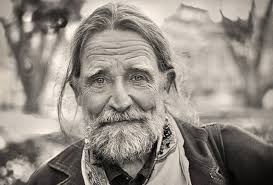
Stephen Jenkinson, the Canadian citizen, is often talking about To be an elder. And that includes grief. The grief of losing someone dear to us.  But also grief for a dying culture. I was not good at grieving when my mother died. Partly because she was over nighty, she was demented and sad and she had the right tp be proud of her life.  She actually started dying when my dad and later on my elder brother died, that was doo much for him. May she was, as I am, a bit too sensitive too handle all the troublesome things in this world. Masshunger, war, hard words from people all around, maybe mostly in the media that was quite new for her; radio, tv newspapers...  We had a quite good life in Sweden, but what about the rest of the world.....  I have been aware of the personal death for a long time. The view of live forever has not comfort me at all, In Buddhism and meditation you also learn to be aware of death too. As life is troublesome it's no disaster to die, it's...
Roger Penrose on a purpose of the Universe

Image
 Penrose has today been awarded with a half Nobel prize in Physics.  He was the first to predict that Einstein's general theory of relativity predicts black holes. (the  other  half of the price goes to the ones who discovered what must be a black hole in the middle of our galaxy).   Penrose describes himself as an atheist but;  In the film  A Brief History of Time , he said, "I think I would say that the universe has a purpose, it's not somehow just there by chance ... some people, I think, take the view that the universe is just there and it runs along – it's a bit like it just sort of computes, and we happen somehow by accident to find ourselves in this thing. But I don't think that's a very fruitful or helpful way of looking at the universe, I think that there is something much deeper about it." [  He went on to explain that he believed our universe would end in a  Big Crunch , a scenario cosmology has since found to be unlikely. Pen...

"The surroundings are aware, sensate, personified."

Image
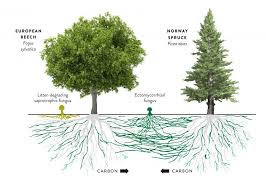
So we can never be totally alone.  A society is more like a wood wide web - we are connected to relatives, children, friends, work, bus-drivers, health care and so on. We are also connected to history and nowadays to countries all over the world. We are connected to melting ice in Arktis and to what's happening in the Amazonas.  That's why Robert Macfarlane compares our world with the fungus network underground. The wood wide web;  It is said the the trees can communicate with each other with the help of the mycelium. A big tree can  nourish a smaller one through the mycelium that can spread very long in the depth.  As we can nourish or or even threaten a fellow being on another continent through our web.  We can also try to change the story of historical events, or of coming ages - so time is also included in our internet- games. So beware of the sources that writers in the internet use.  My source here is mostly Macfarlane's book Underland. Please re...

To focus on the things that really matters - in the time of dying

Image
 Michael Shawe, an Australian producer and director has made a film called "Living in the time of dying". It is really powerful for the ones that really care for the future, who has time and energy enough to care. He interviews people who is caring but also sees the threat of a global tragedy that has already started.  So Shawe seems to come to the conclusion that what is best now is to do the things that really matters.  I guess that is, to be present, to listen and to care for the ones  that are near us, even animal and plants.  I'm not without hope that the situation can change and no one is knowing exactly what the future looks like.  Anyway here is the film:   So what can we do with the voices we have listened to in this film? Turn away? Stop to listen because its to scary? Or maybe just listen and not think much of it for some weeks.  Robert Macfarlane writes in his quite new book "Underland": We are presently living through the Anthrop...

Climate change and epistemology

Image
Jem Bendell, who is the founder of the Deep Adaptation (to climate change) movement, started it with a paper.  It's now downloaded more than 100 000 times.  But it's now also read bye scientists that not miss to mention that Bendell is a professor of sociology and not an expert of climate change.  Though Bendell refers to scientists he is accused for doing cherry picking among them.  Bendell is also very sure of his findings: We are on our way towards a collapse of civilization. We should grieve and then prepare for the collapse.  Many young people will die, but hopefully humankind will survive in some form.  A respected journal,  Sustainability Accounting, Management and Policy Journal (SAMPJ), rejected the paper. A publisher explained that the paper wasn't peer reviewed. They wanted Bendell to correct the paper so it reflected the facts.  Bendell didn't do so but posted it in a blog.  Bendell means that the journal didn't want to post the p...

What gives meaning to life?

Image
It seems to be quite clear. It's relations I think it's too narrow to just say that's it's about other people. Of course it also can be relations to dogs, cats and so on. But also relations to trees, flowers and wild animals. I can sit for hours and look at swallows  in the sky or near the sky. But at the end of the day I mayfLong for the touch of another human. Buy ourselves we are nothing. Yes, it seems that we Are our relations. That is what holds us together. But what happens when an important relation ends? And beware of bad relationships:  A

A spiritual practise makes you more happy!

Image
 At least that's what Rupert Sheldrake.  And he means he could show scientific proof for it.  Well, Sheldrake is not a newcomer in that business.  He has had dialogs with Krishnamurti long ago and he is a defender of the idea that a morfologic field is surrounding us and is binding us together in a great distance.  Nowadays he doesn't speak so much of that field. In his latest book he writes about the benefits of an spiritual practise. He himself meditates in the morning and and prays in the evening.  And it seems to make him more happy; he makes jokes and smiles a lot in this lecture. (you can see the whole speech at IAT-tv)    Is he into New Age. Maybe. But he means that it's science. And I can follow him in that - meditation, and some discipline to do it regularly, preferably with others, seems to make you, at least, more satisfied.  For me it's enough to do it once a day, but also to try be mindful in the everyday things, as washing the d...